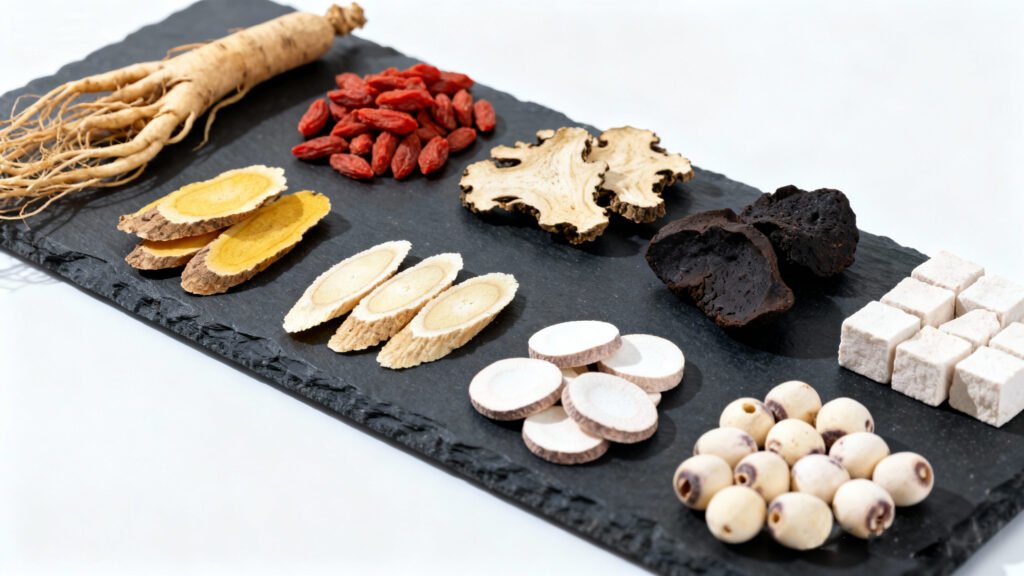
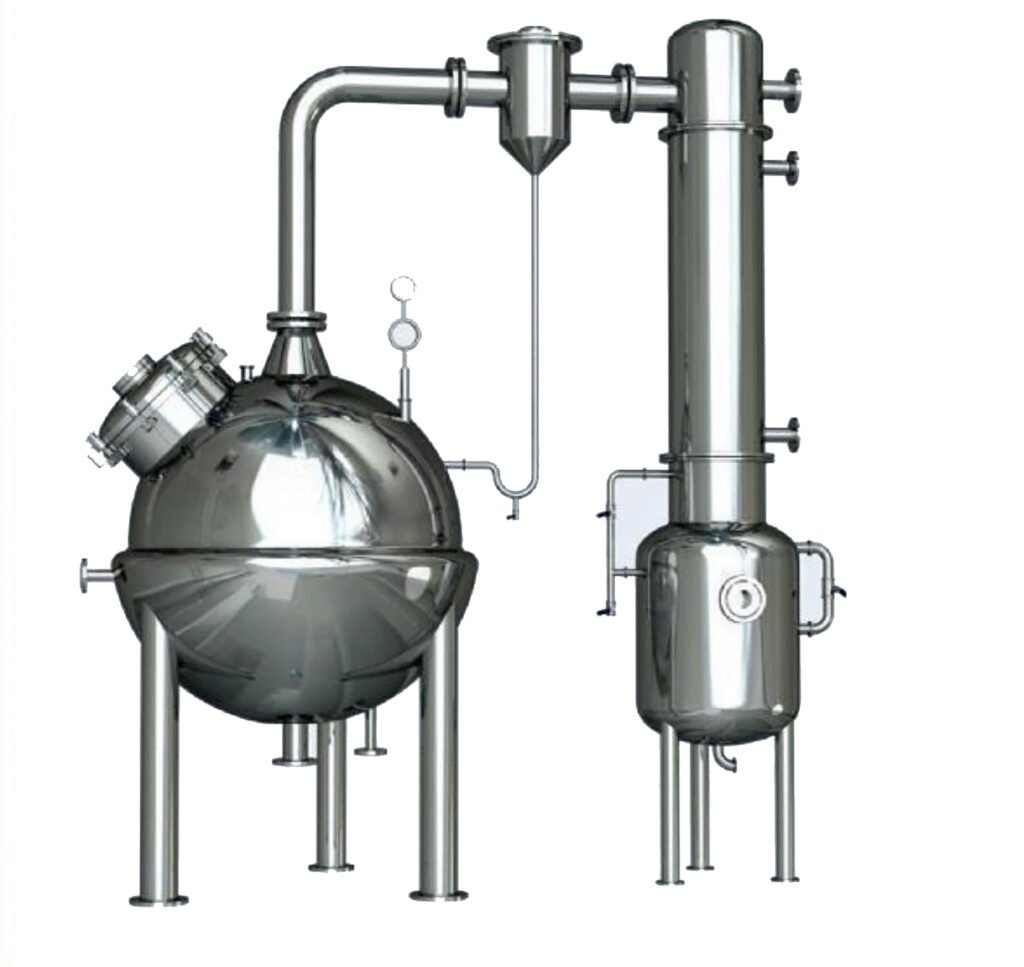
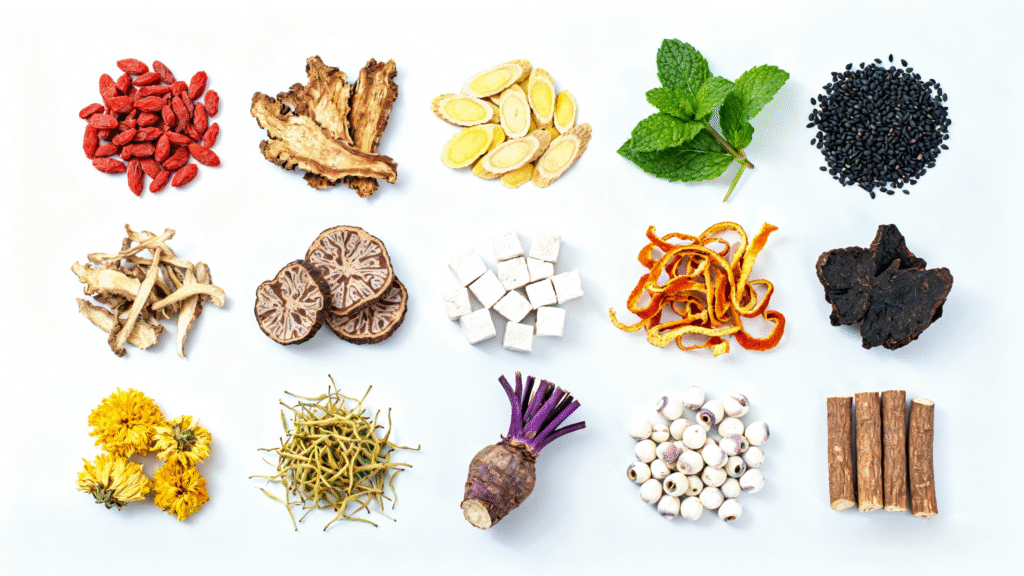
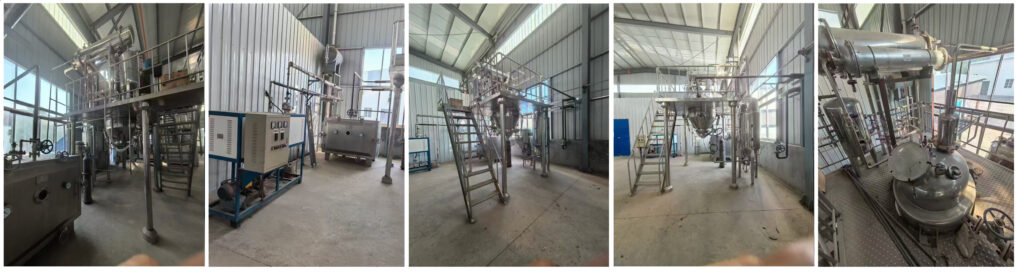
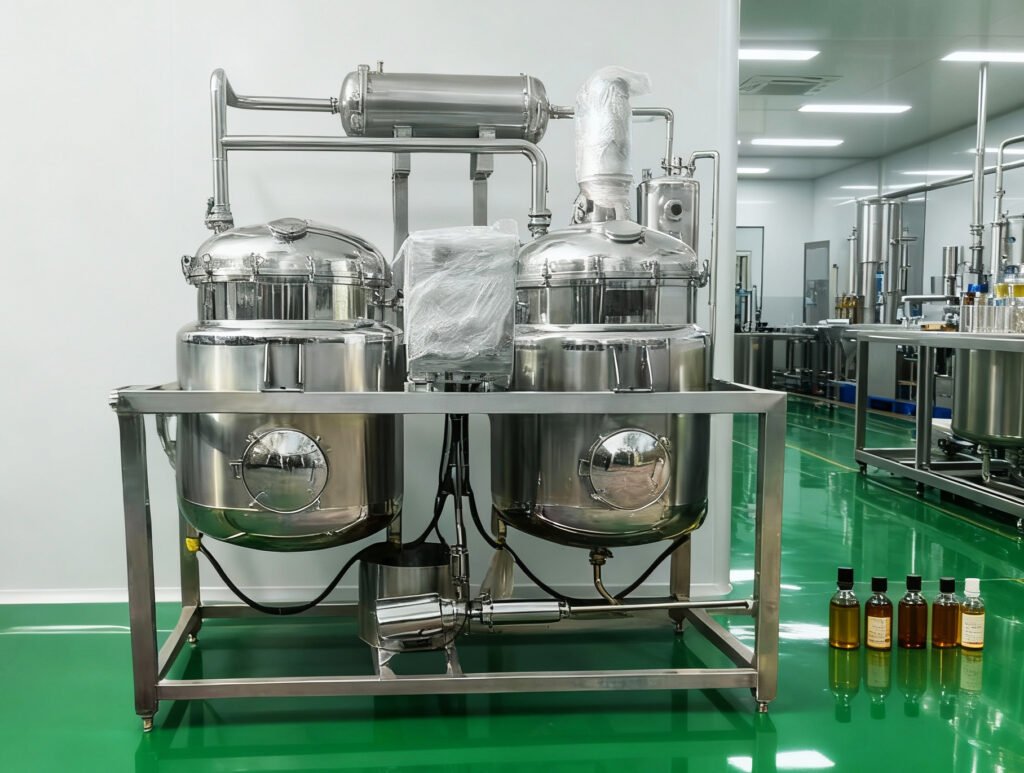
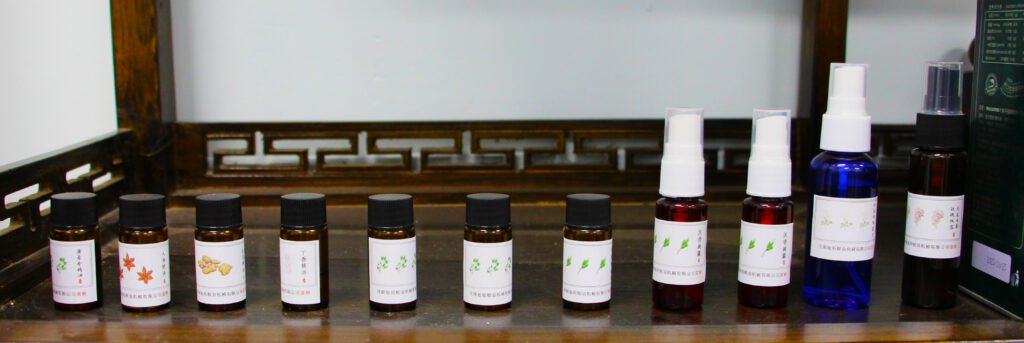
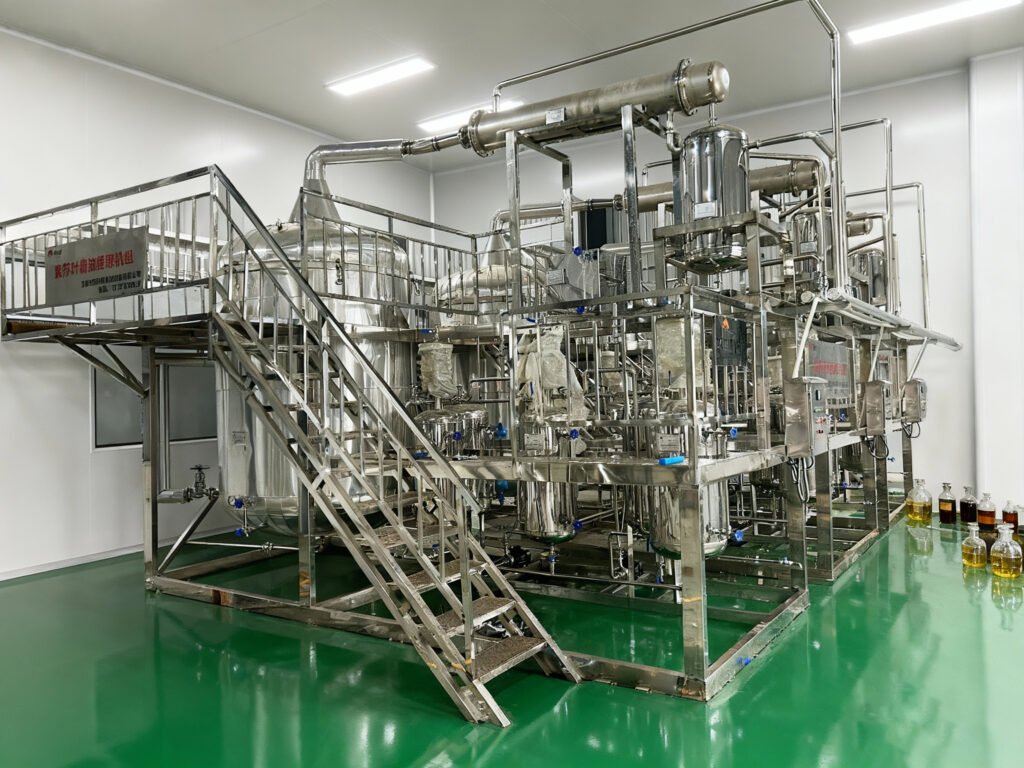
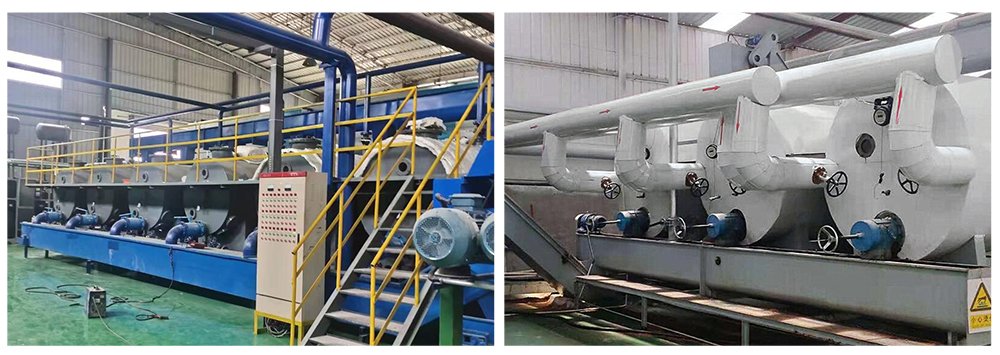
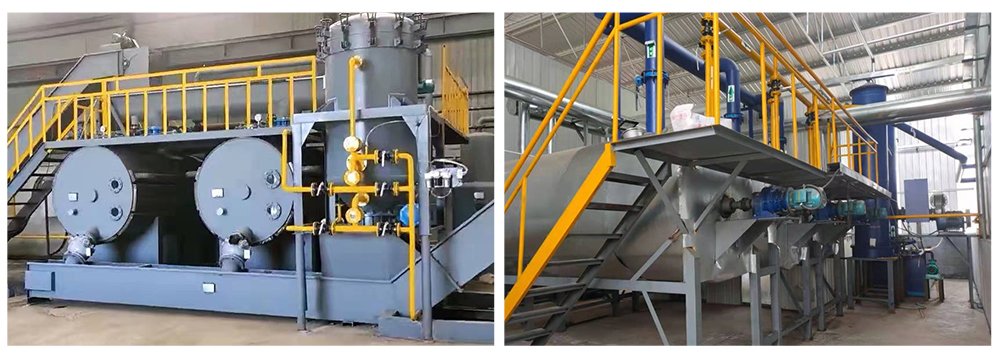
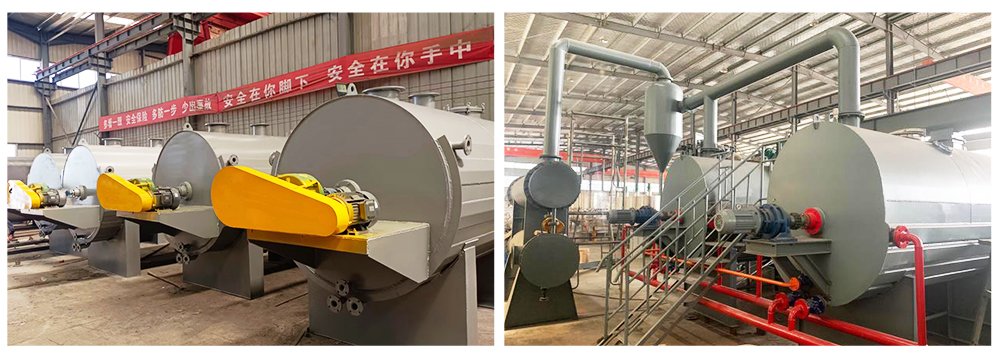
This equipment is applied to evaporate extracting liquid from Chinese traditional medicine.juice, fine chemical liquid etc, and also recycle organic solvent in such fields as pharmacy.biology, food and chemical industry etc.
Characteristics:
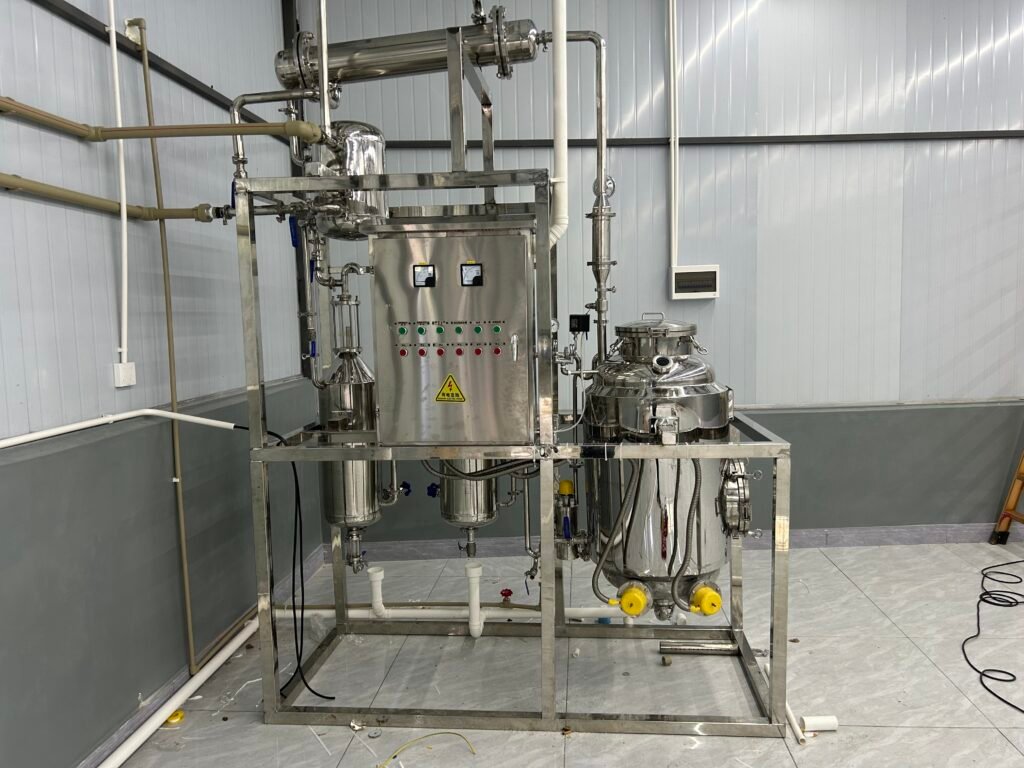
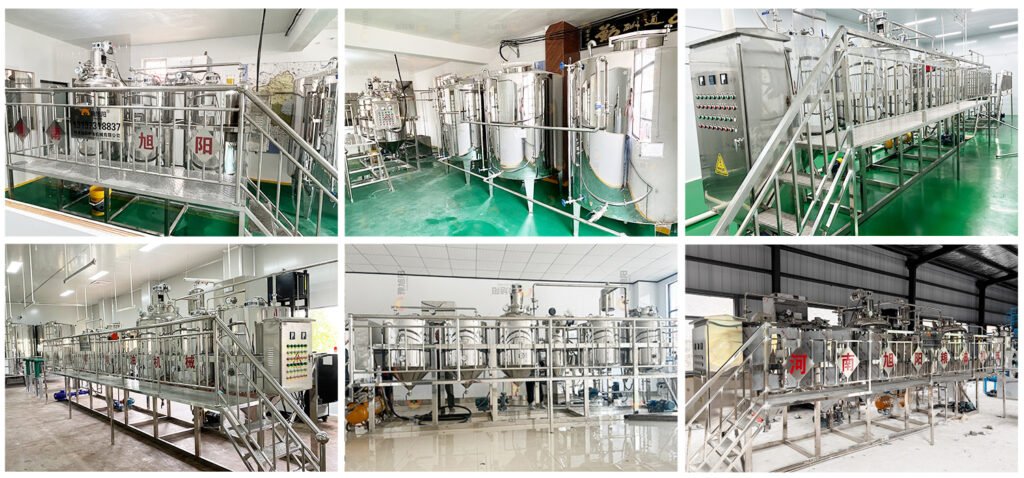
Heated by clamp ferrule, it can make finished product high concentration. It’s polishedin both internal and external side in accordance with GMP requirements. It’s mainly made up of ball shape tank, vapour liquid separator,condenser and receive tank etc.With vacuum decompressing operation, the temperature of evaporating is low, Also mixercan be installed to improve evaporating speed, avoid materials of sticking and foam offorming speed. Each instrumentation, valve or viewing lens is well arranged for easieroperation.
This equipment is suitable for the pharmaceutical, biological, food, and chemical industries. It is commonly used for the extraction and concentration of effective components from plants and animals, as well as aromatic oils. It is a commonly used piece of equipment in traditional Chinese medicine production.
Features:
The unit is ingeniously designed with a beautiful and elegant appearance. The interior and exterior are precision polished, meeting GMP requirements.
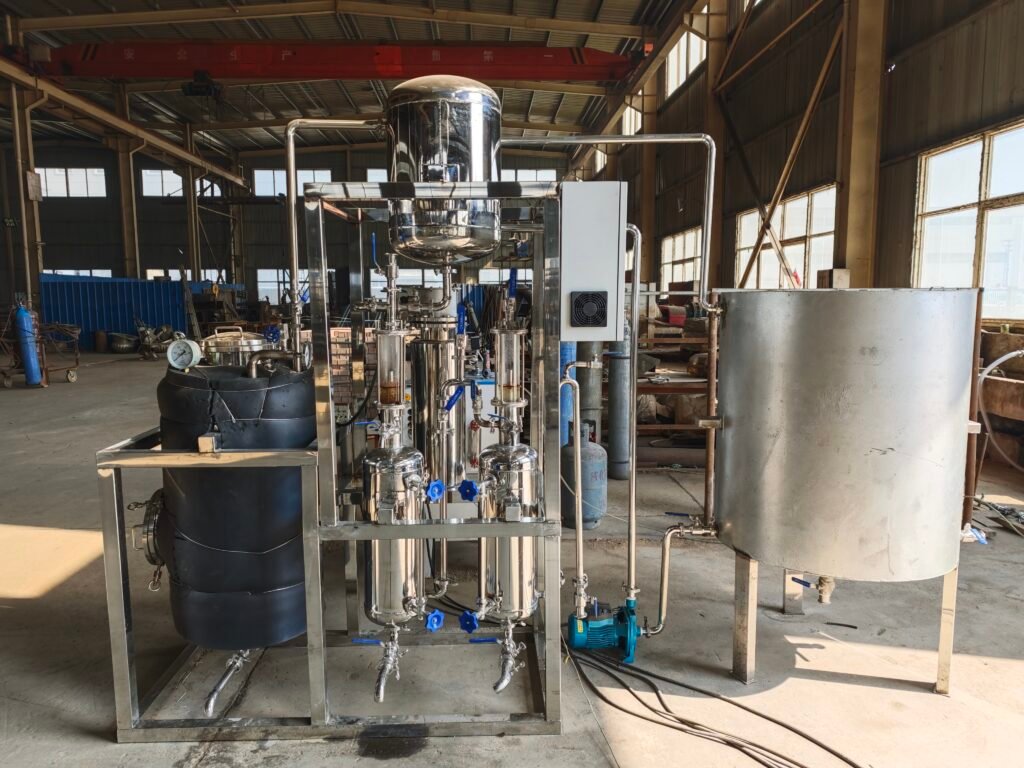
The equipment mainly consists of an extraction tank, defoamer, condenser, cooler, oil-water separator, filter, single-effect external circulation evaporator, and reflux pump.
The equipment has a compact structure and is easy to operate. The extraction tank can be equipped with a stirring device as needed.
The entire production process is carried out under closed conditions, completing the extraction and concentration operations in one step. Solvent consumption is low, and the extraction and concentration time is short.
The temperature control range is wide, allowing for both atmospheric pressure extraction/concentration and atmospheric pressure extraction/reduced pressure concentration.
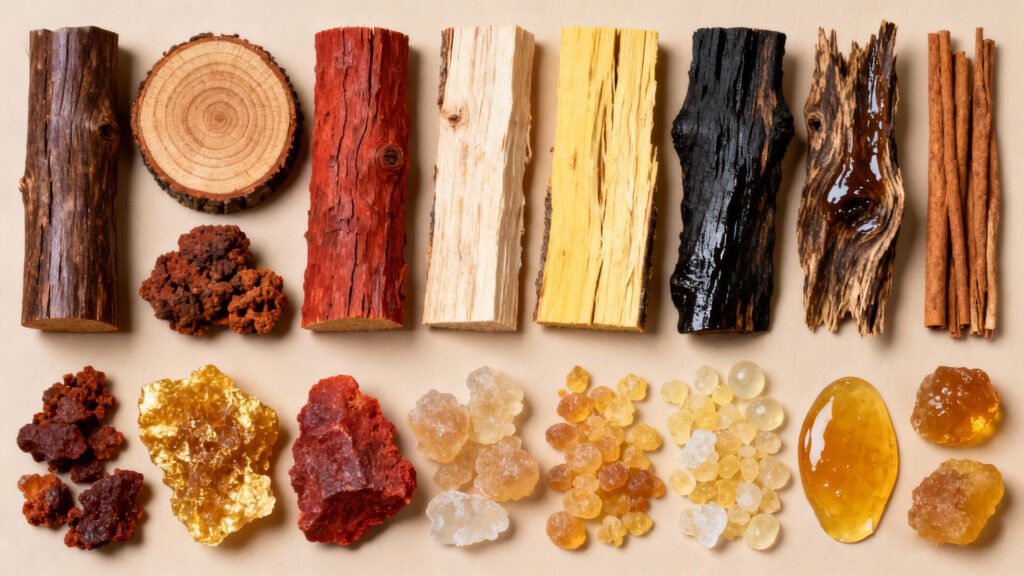
The core raw materials are wood/resin materials containing resin essential oils, including hardwood, resin blocks and wood waste:
Wood type: Sandalwood, agarwood, camphorwood, cypress, etc. (peeled and cut into 3~5cm wood sections, moisture content controlled at 12%~18%);
Resin type: Pine resin, fir resin, frankincense resin, etc. (impurities removed, crushed to 10~20 mesh to avoid resin caking);
Storage: Store in a dry and ventilated environment, shelf life of wood ≤6 months, resin sealed and stored in dark (prevent oxidation and hardening).
Applications
This equipment is suitable for the extraction and concentration of effective components and aromatic oils from plants and animals, while simultaneously recovering solvents. It is particularly suitable for hospitals, universities, and research institutions for small-scale, pilot-scale, or intermediate-scale production.
Features:
The extraction and concentration processes are integrated into one unit, making operation convenient and flexible. The equipment is precision-polished inside and out, meeting GMP requirements.
The equipment mainly consists of an extraction tank, condenser, oil-water separator, filter, single/double-effect central circulating evaporator, and solvent recovery tank.
The equipment features a unique piping system, allowing for multiple operating methods and enabling the testing of various production processes. It was developed by our company’s technical personnel through years of dedicated research.
The entire production process is conducted under closed conditions, completing the extraction and concentration operations in one operation. Solvent consumption is low, and the extraction and concentration time is short.
A stirring device can be equipped according to customer needs. Manual, semi-automatic, and automatic modes are available. Heating methods include electric heating and steam heating.
The core raw materials are essential oil-containing flowers such as roses, jasmine, lavender, neroli, and chamomile, with different pretreatment requirements for various types:
Fresh flowers: Process within 2 hours after harvesting (essential oil is volatile), remove calyxes and dead branches, and control moisture content at 75%~85%;
Dried flowers: Dry at low temperature (≤40℃) to 8%~12% moisture content, and crush gently (to avoid petal damage and essential oil loss);
Storage: Seal and store in dark at 0~4℃, shelf life of fresh flowers ≤12 hours, dried flowers ≤30 days.
Equipment Process
Mainly adopts hydrodistillation/solvent extraction , with the core process:
Feeding: Put fresh flowers into anti-extrusion distillation kettle at material-water ratio of 1:10~1:12, and dried flowers at 1:6~1:8;
Extraction: Steam distillation (90~95℃, 2~5h) or low-temperature solvent extraction (30~40℃) to avoid damaging floral components at high temperature;
Separation: For steam method, conduct condensation (≤20℃) and oil-water separation (accuracy ≥99.6%); for extraction method, conduct solvent removal and refining;
Finished product: Dehydrate under vacuum (-0.085MPa) and store with nitrogen filling, integrated with floral component retention module.
3. Equipment Features
Flower adaptability: The kettle body is equipped with flexible inner lining to avoid petal extrusion and damage, with essential oil aroma retention rate ≥98%; compatible with fresh/dried flowers and flowers in different flowering periods, yield increased by 10%~18%;
Intelligent & low-consumption: one-click start/stop; waste heat recovery reduces consumption by 35%, unit energy consumption ≤75kW·h/kg;
Safe & eco-friendly: 316L food-grade stainless steel material with multiple anti-leakage protections; extraction solvent can be recycled and reused without waste liquid discharge, floor area ≤18㎡, only 1 person on duty required.
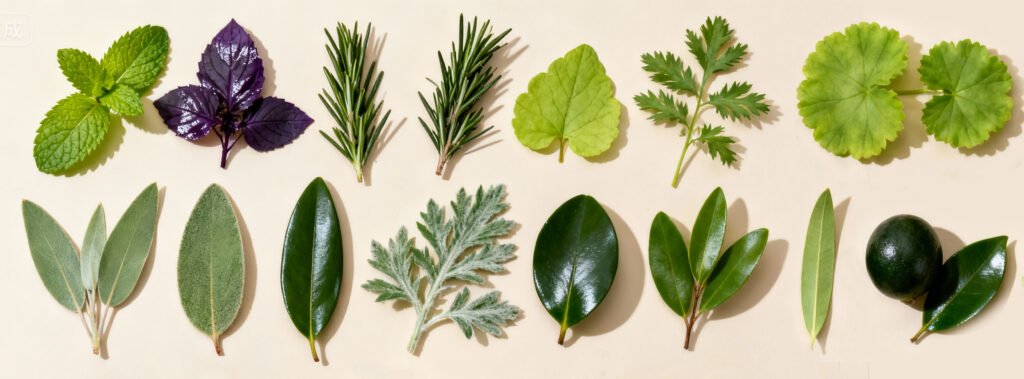
The core raw materials for extracting essential oils from leafy plants are various leafy plants containing essential oils, encompassing aromatic herbs, woody plants, and leaves of economic crops. The characteristics of different raw materials determine the appropriate extraction process parameters: Common Raw Material Categories:
Specialty Plants: Geranium leaves, lemon eucalyptus leaves, sweet orange leaves, etc. (essential oils with rich aroma layers, mostly used in daily chemical and perfumery fields).
Woody Plants: Eucalyptus leaves, camphor leaves, laurel leaves, tea leaves, etc. (essential oil content 0.5%~5%, rich in eucalyptol, camphor, and other stabilizing components);
Process Adaptability Advantages
Specifically designed for leafy plants: The distillation vessel is equipped with an anti-tangling stirring paddle to prevent leaves from clumping together, increasing steam penetration by 20%;
Multi-raw material compatibility: Parameters can be quickly switched to adapt to fresh/dried leaves without replacing core components;
High essential oil yield: Compared to conventional distillation equipment, the yield is increased by 8%~15%, with no loss of essential oil aroma components.
Performance and Operational Advantages
Intelligent Control: one-button start-up without the need for professional technicians;
Energy Saving and Consumption Reduction: Double-layer insulated distillation vessel + waste heat recovery, energy consumption per unit essential oil ≤80kW・h/kg, saving more than 25% energy compared to traditional equipment;
Safety and Stability: Equipped with overpressure relief, overtemperature alarm, and water shortage protection, all made of stainless steel (304/316 optional), meeting food-grade/pharmaceutical-grade standards;
Easy Cleaning and Maintenance: The vessel body and pipelines are designed without dead corners, supporting CIP online cleaning, with a maintenance cycle of ≥6 months.
Environmental and Economic Advantages
Green Emissions: Distillation wastewater can be recycled for steam generation after simple treatment, with no industrial wastewater discharge;
Small Footprint: Modular design, the entire set of equipment occupies ≤15㎡, adaptable to factory/mobile processing scenarios;
Low Operating Costs: Fully automatic operation requires only 1 person to operate, consumables (filter elements, seals) have a long replacement cycle, and annual maintenance costs are ≤2% of the total equipment price.
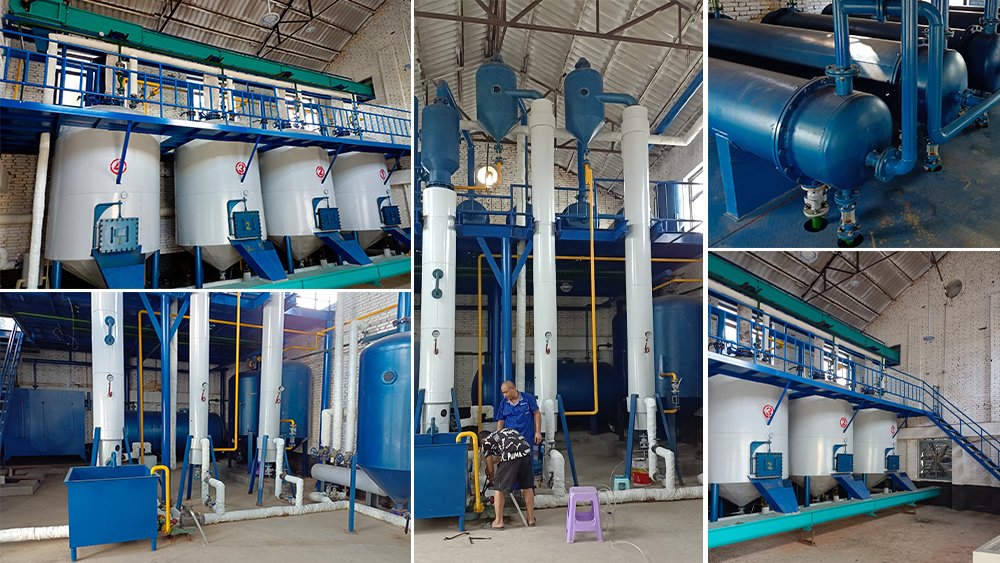
This oil refining equipment is designed to process crude oil into a high-quality, edible product. The refining process removes impurities, free fatty acids, and other undesirable components, ensuring the oil meets safety and quality standards.
the capacity is 300-1000kg per day, which can meet many customers’ requirement,and it is used to clean the oil after oil press machine, it can clean the oil through first step,second step ,third step and fourth step.
STEPS FUNCTION DESCRIPTION OF SMALL CRUDE OIL REFINERY:
1. Degumming: – Removes phospholipids and gums by adding water or acid. – Improves oil stability and clarity. 2. Neutralization (Deacidification): – Free fatty acids are neutralized using an alkali solution. – Forms soapstock, which is separated from the oil. 3. Bleaching (Decolorization): – Adsorbs pigments and remaining impurities using bleaching earth or activated carbon. – Results in a lighter-colored oil. 4. Deodorization: – Steam distillation removes volatile compounds responsible for odors and flavors. – Enhances the oil’s sensory qualities.
Capacity
300-1500kg per batch
Functions
deacidfication, degumming, dewater bleaching and deodorization
Application area
small medium and large oil factory, new starter for oil planthigh level oil processing,pure oil making factory
Operator needed
1-2 workers needed
Warranty time
one year, accessories provided for a fee and technology support whole life
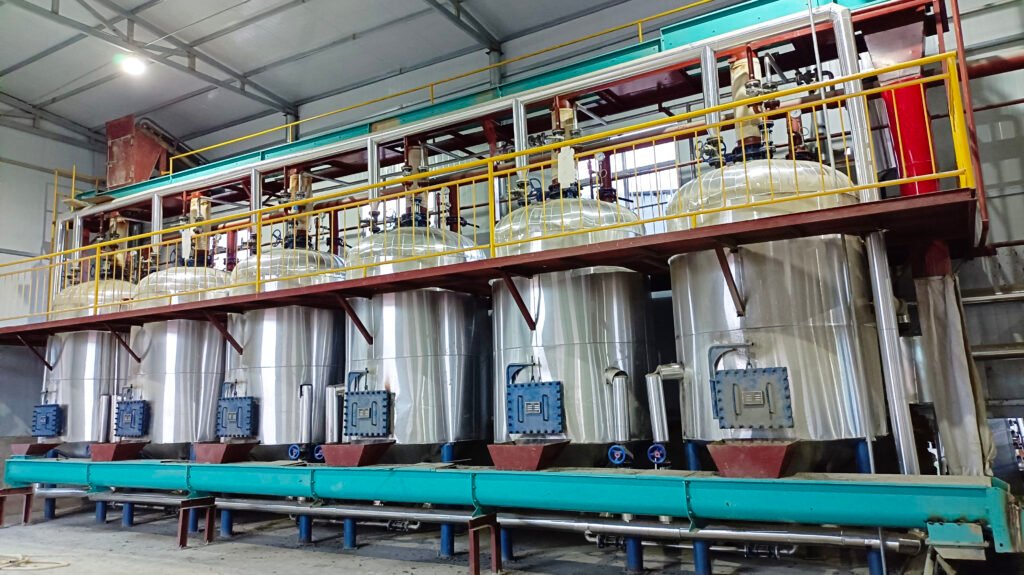
The tank group extraction equipment for oil processing is Main equipment for medium and small-scale oil production, consisting of extraction tanks, solvent recovery systems, meal desolventizing systems, and miscella treatment systems. Adopting batch-type tank group operation, it is suitable for alternating processing of multiple oil seeds (soybeans, rapeseeds, etc.), featuring a simple structure and flexible operation.
2. Working Principle
Based on the solvent extraction principle (like dissolves like): 6# solvent oil is used to dissolve oil in oilseeds to form miscella. Oil and solvent are separated via distillation/steam stripping (utilizing boiling point differences), the solvent is recovered and recycled, and the meal is desolventized and dried to become a finished product.
3. Main Procedures
Feeding: Pretreated oilseeds are loaded into leaching tanks and sealed;
Leaching: Solvent is sprayed/soaked with oilseeds in countercurrent to dissolve oil and form miscella;
Separation: Miscella is separated into crude oil through evaporation and steam stripping, and the solvent is condensed for recovery;
Desolventizing: Wet meal is desolventized, then dried and cooled to obtain finished meal;
Treatment: Tail gas and wastewater are treated up to standard to avoid solvent leakage.
4. Main Advantages
High oil extraction efficiency, with residual oil rate in oilseeds ≤ 1%;
Adaptable to multiple oilseeds with flexibly adjustable parameters;
Solvent recovery rate ≥ 95%, reducing production costs;
Low equipment investment and operation/maintenance costs, suitable for medium and small production capacities;
Minimal protein denaturation in meal, ensuring high quality;
Single tank failure does not affect overall operation, enabling flexible operation.
Features: Abundant supply, cost-effective, high fat content
2. Equipment Specifications
The system is designed with fully automated operations including feeding, slag discharge, and oil-residue separation, ensuring simple operation and compliance with environmental standards.
When animal adipose tissue is heated and melted, oil is released from it. Under the effect of heat, the oil in animal fat cells transitions from a solid to a liquid state. Heating animal fat reduces the viscosity of the oil and lowers its surface tension. This is the result of thermal molecular motion and the weakening of intermolecular cohesion. The reduction in cohesion makes it easier for the oil to separate from the cells and allows the oil droplets from individual cells to coalesce into larger masses. Simultaneously, due to differences in specific gravity, the oil separates from the protein.
3. Rendering Process
Melting is conducted under vacuum, which removes moisture from the raw materials, yielding dry oil and dry oil residue.
As the equipment is sealed, the entire melting process avoids any adverse effects of air oxidation on the oil, such as an increase in peroxide value and darkening of color.
It ensures the production of high-quality oil, as organic substances that enhance the edible value and storage stability of the oil (such as vitamins, stearyl alcohol, lecithin, etc.) are preserved.
The oil undergoes partial deodorization while also eliminating unpleasant off-flavors.
High-quality oil residue is obtained, as the proteins remain largely undenatured due to the vacuum melting process.
Thermal energy loss during the melting process is reduced.
4. Core Advantages
High efficiency: 12-18% higher yield than traditional methods
Premium quality: Clear oil, no off-odor, retains natural nutrients
User-friendly: Digital control panel, simple operation, low maintenance
Energy-saving: 20%+ energy reduction, eco-friendly design
Versatile: Suitable for small workshops to large food plants
The primary raw materials for lard rendering are porcine-derived fats, mainly including fresh pork leaf lard, back fat, belly fat, and mesenteric fat. Raw materials are selected from the fresh fat tissue of healthy pigs, adhering to screening criteria of no odor, no spoilage, and no impurities to avoid affecting the flavor and quality of the finished oil. These raw materials are widely available, can be purchased in bulk from pig slaughterhouses and meat processing plants, with controllable costs and stable supply, laying the foundation for ensuring lard yield and natural flavor.
II. Equipment Overview
Mainstream lard rendering equipment is made of food-grade stainless steel, complying with food hygiene and safety standards, and is classified into three categories: small-scale rendering pots for home workshops (capacity 5-50L, manual operation, simple structure, suitable for small-batch production), high-temperature atmospheric rendering machines for small and medium-sized processing plants (capacity 100-500L, equipped with temperature control systems and stirring devices, moderate automation), and continuous vacuum low-temperature rendering production lines for large-scale production (integrated equipment including cleaning, cutting, rendering, separation, and filtration, with precise temperature control, suitable for mass production). All equipment features high temperature resistance, corrosion resistance, and easy disassembly for cleaning; some high-end models are also equipped with oil purity detection modules to further ensure product quality.
III. Rendering Process
Raw Material Pretreatment: Fresh fat raw materials are rinsed with clean water to remove blood, hair, and other impurities, then cut into 2-5cm pieces by a meat cutter (to increase heat transfer area and shorten rendering time);
Feeding & Rendering: Cut raw materials are put into the equipment. High-temperature atmospheric models operate at 120-150℃ for 2-4 hours, with uniform heating via stirring devices to prevent local burning; vacuum low-temperature models work at 80-100℃ under negative pressure for 3-5 hours to reduce oil oxidation;
Oil-Residue Separation: After rendering, liquid oil and oil residue are quickly separated through the equipment’s built-in filter screen or centrifugal separation device. The oil residue can be recycled as feed raw material;
Refining & Purification: The separated crude oil undergoes multi-layer filtration (quartz sand filtration + activated carbon adsorption) to remove fine impurities and odorous substances;
Cooling & Finished Product: The refined oil is introduced into a cooling tank, cooled naturally to room temperature or refrigerated for 12-24 hours for precipitation, removing residual impurities to finally obtain clear and pure finished lard.
IV. Core Advantages
High Efficiency & Yield: Compared with traditional iron pot rendering, the oil yield is increased by 15%-20%. Small-scale equipment can produce 50-200kg of finished products per batch, while large-scale production lines can reach several tons per day, meeting the needs of different production scales;
Quality Assurance: Food-grade stainless steel material prevents oil contamination; the precise temperature control system avoids excessive oil oxidation, maximizing the retention of lard’s natural flavor and nutrients. The finished oil is clear, free of impurities, and has a long shelf life;
Easy Operation: Equipped with digital control panels, the equipment allows precise setting of temperature and time, with high automation. No professional technicians are required for operation, and it is easy to disassemble and clean, reducing operation and maintenance costs;
Energy Conservation & Environmental Protection: Some vacuum models adopt waste heat recovery systems, reducing energy consumption by more than 25% compared with traditional equipment, in line with green production concepts. Meanwhile, oil residue is recycled to achieve maximum resource utilization;
Wide Adaptability: From small-scale equipment for home workshops to continuous production lines for large food processing plants, it can be flexibly selected according to production capacity requirements, with low investment threshold and short payback period.
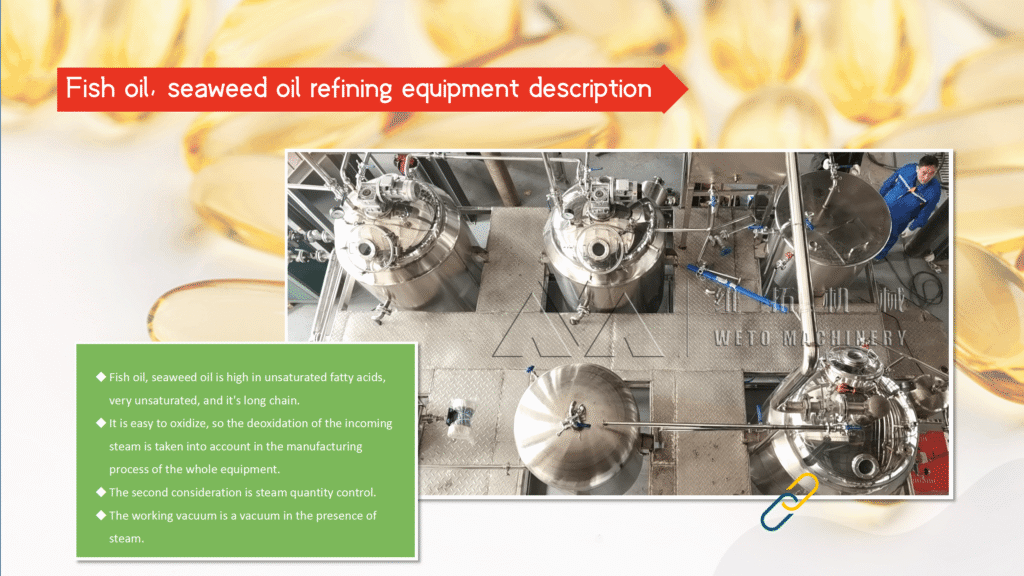
High-quality fish oil typically comes from fresh, sustainable, small oily fish like anchovies.
Fish oil is primarily sourced from oily, cold-water fish:
Key species: Anchovy (most common, balanced EPA/DHA), sardine/mackerel (rich in Omega-3s), herring (traditional Northern European source), plus tuna/salmon by-products (tuna oil high in DHA, salmon oil may have astaxanthin).
Raw material types: Whole small oily fish (best for high-grade supplements, consistent quality) or fish processing by-products (sustainable/cost-effective, needs strict purification).
Special case: Cod liver oil (from lean cod, high in natural Vitamins A and D).
Key factors: Freshness (prevents oxidation), sustainability (small fish have less heavy metals), purity (molecular distillation removes contaminants).
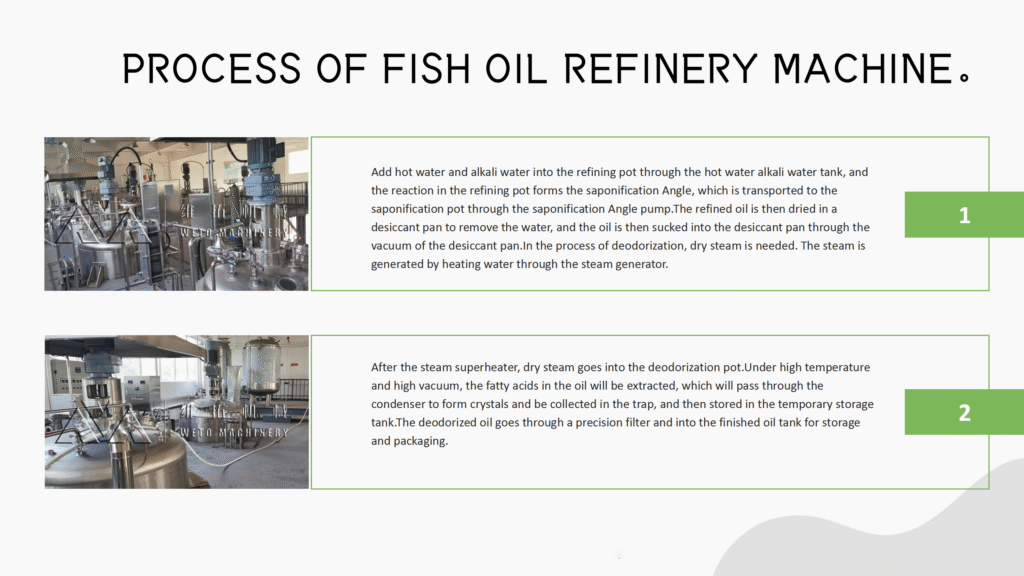
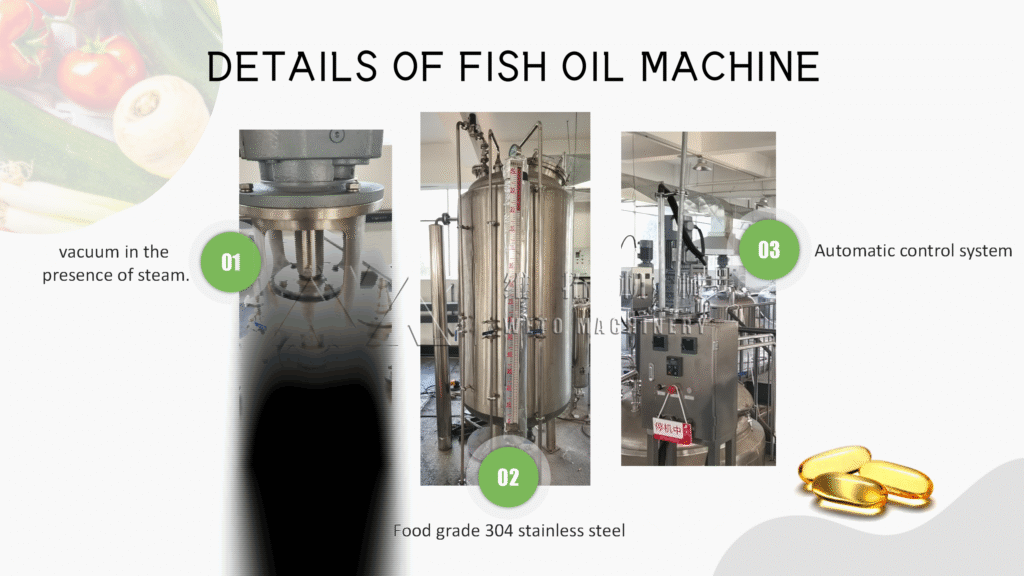
Equipment material, food grade 304 stainless steel, easy to clean, clean seal lubrication, using food grade lubricating oil.
Automatic control system, pure steam generator, thermal oil furnace.Electric heating.High pressure boiler for deodorization.The temperature is 180-190 degrees Celsius.
The refining pot and soap corner pot are all sealed designs.The inner surface of the equipment is polished by mirror and the outer surface is brushed.The deodorizing part USES double Roots vacuum pump.
Oil is easy to oxidize. After vacuuming, it can be produced by filling with nitrogen.The deodorized material is cooled with circulating water.
If the oil quality is high, add light to remove the odor tower, and there is a grease trap to reduce splashing during deodorization, which will be taken away by vacuum.
Aluminum or stainless steel for insulation.All tanks have several quick interfaces, connecting various pipelines, purification nozzle, nitrogen nozzle, vacuum nozzle.McIntosh vacuum gauge of 10 pa.The refining pan is made into a cone base.
The heat conduction oil and cooling water of the deodorizing pan are built in coils.Argon arc welding.Internal polishing, external insulation.Heating and cooling of the deodorizer, an inner coil, a jacket, external insulation.
.Add small plate and frame filter press.In addition, the cleaning device can not spare material, does not affect the normal production.Plate-type liquid level gauge is installed at the bottom of the cone to facilitate the observation of saponin.
The bottom cleaning tube of deodorizing pan is perforated downward to prevent waste of residual oil inside.Jacket heating, inner coil cooling, jacket height should not be too high, less raw materials can be produced.The oil level should not be lower than the heating jacket.
During deodorization, the oil foam catcher reduces oil spatter and prevents oil from being carried away by vacuum.
Production process, closed production, packaging process, the whole process filled with nitrogen. Refining POTS and soap pans are all designed to be sealed.The inner surface of the equipment is polished by mirror and the outer surface is brushed.The deodorizing part USES double Roots vacuum pump.
Several quick interfaces for all tanks, connecting various pipelines, purification ports, nitrogen ports and vacuum ports.McIntosh vacuum gauge of 10 pa.